
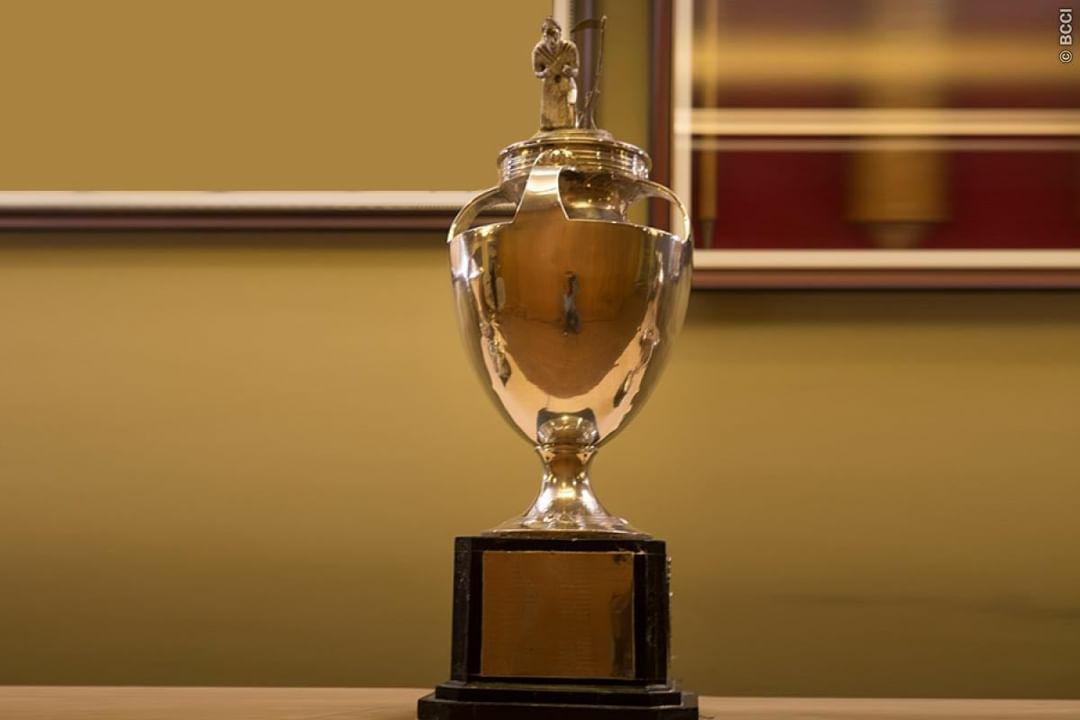
The Ranji Trophy is India’s premier domestic first class cricket tournament, organised by the Board of Control for Cricket in India (BCCI). Teams representing state associations and other cricketing organisations compete in multi day matches to win the national championship.
The tournament has played a major role in developing Indian Test cricketers for more than nine decades. Players such as Sachin Tendulkar, Rahul Dravid, Cheteshwar Pujara and Ravichandran Ashwin have built important parts of their careers through domestic cricket. Strong performances in the Ranji Trophy can help emerging players earn recognition and opportunities for national selection.
What Is the Ranji Trophy in Cricket?
The Ranji Trophy is India’s premier red ball cricket competition, played under first class rules. Unlike the Indian Premier League, which follows the T20 format, Ranji Trophy matches last several days and test players’ batting technique, bowling stamina and ability to perform in different pitch and weather conditions.
Teams represent state cricket associations and organisations such as Railways and Services. Introduced in the 1934 to 35 season, the tournament is named after Kumar Shri Ranjitsinhji, the Indian born cricketer who became famous while playing in England. It remains one of the most important competitions in Indian domestic cricket.
History of the Ranji Trophy
The BCCI established a national first class championship in 1934. The inaugural competition was initially called the Cricket Championship of India and was named after Ranjitsinhji, who had died in 1933.
The first match took place on 4 November 1934 between Madras and Mysore at Chepauk in Madras, now Chennai. Bombay, the former name of Mumbai, won the inaugural championship by defeating Northern India in the final.
Before the second season in 1935 to 36, the competition was renamed the Ranji Trophy. Over the decades, its structure evolved from early knockout contests to formats incorporating group stages, league points and divisional competitions.
The 2020 to 21 edition was cancelled because of the COVID 19 pandemic. The tournament returned in the following season and continues to play an important role in India’s domestic cricket structure.
Ranji Trophy Format: How Does It Work?
The Ranji Trophy is played as a multi day first class competition. Its structure separates teams into the Elite division and the Plate division.
For the 2026 to 27 domestic season, the BCCI has announced 32 Elite teams divided into four groups, along with six teams in the Plate group.
| Feature | Details |
|---|---|
| Organiser | Board of Control for Cricket in India |
| Format | First class cricket |
| Ball | Red ball |
| Match duration | Usually four days for league matches |
| Elite division | 32 teams in four groups for 2026 to 27 |
| Plate division | Six teams for 2026 to 27 |
| Main objective | Win the Ranji Trophy championship |
| Qualification | Group performance followed by knockout matches |
The BCCI’s 2026 to 27 domestic season announcement confirms the Elite and Plate structure.
1. Elite Group Stage
The Elite division contains teams competing in four groups. Teams earn points through match results and first innings performances, with consistent results determining which sides progress to the knockout rounds.
A team needs to perform across its league schedule rather than rely on one outstanding match. Both outright wins and first innings performances can influence qualification.
2. Plate Group Stage
The Plate division provides participating teams with a competitive route to a division championship. It includes teams working to establish themselves at the highest level of domestic cricket.
Promotion and relegation arrangements connect the Plate and Elite divisions. The applicable season regulations determine how teams move between the two levels.
3. Knockout Stage
The leading Elite teams advance to the quarter finals, followed by the semi finals and final. Under the recent format, the top two teams from each of the four Elite groups qualify for the quarter finals.
The Plate competition has its own knockout stage. Teams must perform consistently in the group phase before competing for the division title and promotion opportunities.
How Does the Ranji Trophy Points System Work?
The Ranji Trophy points system rewards outright victories while recognising the importance of a first innings lead when a match ends in a draw. Under the BCCI’s published 2025 to 26 men’s multi day playing conditions, the main result based points are as follows.
| Match result | Points |
|---|---|
| Outright win | 6 |
| Win by an innings or 10 wickets | 1 bonus point |
| First innings lead without an outright win | 3 |
| Loss on first innings | 1 |
| First innings result not achieved, including an unfinished first innings | 1 |
| Tie on both innings | 3 points each |
| Outright loss | 0 |
Source: BCCI Men’s Multi Day Playing Conditions 2025 to 26. The points shown refer to the cited season’s rules.
A first innings lead can be decisive even when a match does not produce an outright winner. For example, if Team A scores 420 and Team B makes 300 in the first innings, Team A leads by 120 runs. If the match later ends in a draw, that lead can affect the points awarded.
The first innings is especially important in knockout matches. As the 2025 to 26 final demonstrated, a substantial first innings lead can determine the championship even when the match finishes as a draw.
Why Does the Ranji Trophy Matter?
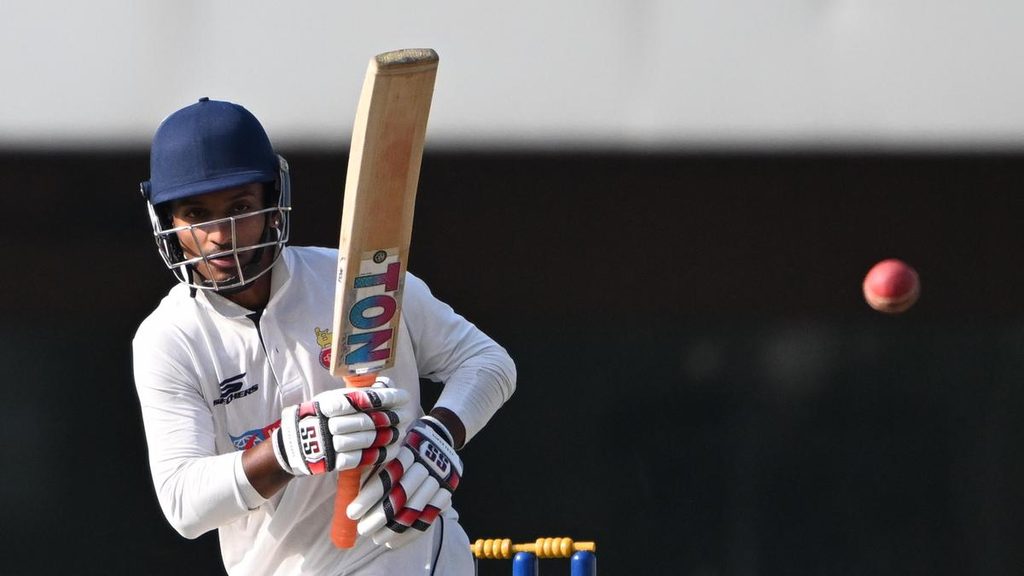
Source: India Today
The Ranji Trophy is more than a domestic championship. It helps prepare players for the demands of international red ball cricket.
1. A Route to the Indian Test Team
Selectors use domestic performances as one part of their assessment when choosing players for India. A batter who scores runs consistently against quality bowling can demonstrate technique, patience and the ability to handle pressure.
Bowlers also gain opportunities to prove that they can maintain accuracy and take wickets over long spells. Strong performances can help a player earn national selection, although no single tournament guarantees an international career.
2. Builds Red Ball Skills
Test cricket requires skills that cannot always be judged through short format statistics. Batters must leave the ball well, defend for long periods and adapt to changes in pace and bounce.
Fast bowlers need stamina and control, while spinners must learn to create pressure through flight, variation and accuracy. Ranji Trophy matches give players repeated opportunities to develop these abilities.
3. Tests Players in Different Conditions
India has a wide range of pitches, climates and playing conditions. A match in one region may favour spin, while another venue may offer movement for fast bowlers.
Players must learn to adapt their plans rather than depend on one approach. This experience can be valuable when they move into international cricket, where conditions can change significantly between venues.
4. Creates Opportunities for Emerging Players
The tournament gives young cricketers a competitive platform beyond age group cricket and local leagues. A strong season can help an emerging player gain recognition from selectors, coaches and other teams.
It also allows players who have fallen out of the national side to rebuild their form. Consistent domestic performances can strengthen their case for a return to higher level cricket.
Who Has Won the Ranji Trophy Most Often?
Mumbai is the most successful team in Ranji Trophy history, with 42 titles. Formerly known as Bombay, Mumbai dominated the competition for decades and won 15 consecutive championships from the 1958 to 59 season through 1972 to 73.
Karnataka and Delhi are the next most successful teams in the historical title standings, with eight and seven titles respectively. Other champions include Rajasthan, Saurashtra, Vidarbha, Madhya Pradesh and Jammu and Kashmir.
Ranji Trophy: Teams With the Most Titles
| Rank | Team | Titles |
|---|---|---|
| 1 | Mumbai (formerly Bombay) | 42 |
| 2 | Karnataka | 8 |
| 3 | Delhi | 7 |
Mumbai’s record reflects its sustained strength across different generations of domestic cricket. However, recent seasons have shown that the championship remains competitive, with five different winners across the last five completed seasons from 2021 to 22 through 2025 to 26.
Recent Ranji Trophy Champions
| Season | Champion | Runner up |
|---|---|---|
| 2025 to 26 | Jammu and Kashmir | Karnataka |
| 2024 to 25 | Vidarbha | Kerala |
| 2023 to 24 | Mumbai | Vidarbha |
| 2022 to 23 | Saurashtra | Bengal |
| 2021 to 22 | Madhya Pradesh | Mumbai |
How Did Jammu and Kashmir Win the 2025 to 26 Ranji Trophy?
Jammu and Kashmir won their first Ranji Trophy title on 28 February 2026 after securing a first innings lead over Karnataka in the final at the KSCA Cricket Stadium in Hubballi. The five day match was played from 24 to 28 February.
The final featured several important performances and milestones.
- Jammu and Kashmir’s first innings: J&K scored 584 runs, establishing a strong position in the final.
- Karnataka’s first innings: Karnataka were bowled out for 293, leaving J&K with a 291 run lead.
- Shubham Pundir’s century: Pundir scored 121 runs to help J&K build their first innings total.
- Mayank Agarwal’s contribution: Agarwal top scored for Karnataka with 160 runs, while captain Devdutt Padikkal led the side during the final.
- Auqib Nabi’s bowling: Nabi took 5 wickets for 54 runs in Karnataka’s first innings. It was his seventh five wicket haul of the season, and he finished the campaign with 60 wickets to win Player of the Series.
- Second innings declaration: J&K declared at 342 for 4, with Qamran Iqbal scoring 160 not out and Sahil Lotra contributing an unbeaten century.
- Overall match lead: J&K’s combined lead reached 633 runs after their second innings declaration.
- Final result: The match ended in a draw on the fifth and final day, but J&K secured the championship through their 291 run first innings lead.
- Leadership: Paras Dogra captained Jammu and Kashmir, while Devdutt Padikkal led Karnataka.
- Historical achievement: The victory ended J&K’s 67 year wait for the championship and made them the 18th different side to win the Ranji Trophy.
- Karnataka’s campaign: Karnataka were pursuing their ninth Ranji Trophy title but finished as runners up.
The result also continued a notable trend: the last five seasons have produced five different champions. Read Wisden’s report on the 2025 to 26 final for further match details.
Who Holds the Major Ranji Trophy Records?
The Ranji Trophy has produced outstanding individual performances across generations. Its historical records include career batting and bowling milestones as well as Mumbai’s long period of dominance.
| Record | Player or team | Achievement |
|---|---|---|
| Most titles | Mumbai | 42 |
| Most consecutive titles | Mumbai | 15 |
| Most career runs | Wasim Jaffer | 12,038 |
| Most career wickets | Rajinder Goel | 640 |
Wasim Jaffer holds the record for the most career runs in Ranji Trophy history, with 12,038. Rajinder Goel, one of India’s most successful domestic left arm spinners, holds the record for the most wickets with 640.
These records highlight the consistency required to succeed in first class cricket. While a single outstanding season can bring recognition, career milestones usually reflect years of performances across different conditions and against a wide range of opponents.
How Is the Ranji Trophy Different From the IPL?
The Ranji Trophy and the IPL serve different purposes. One focuses on first class cricket, while the other is a professional T20 league built around short matches and franchise teams.
| Feature | Ranji Trophy | IPL |
|---|---|---|
| Format | First class cricket | Twenty20 cricket |
| Match duration | Usually four days for league matches | Usually around three to four hours |
| Ball | Red ball | White ball |
| Teams represent | State associations and other organisations | Franchises |
| Main skills tested | Long innings, sustained bowling and patience | Power hitting, short spells and rapid decisions |
| Role in development | Important for red ball and Test preparation | Important for T20 skills and professional exposure |
Both competitions can help players develop their careers. The Ranji Trophy tests long format skills, while the IPL offers experience in high pressure T20 cricket. A player may perform well in one format and still need time to adapt to the other.
FAQs
The Ranji Trophy is India’s main domestic first class cricket tournament. Teams representing state associations and other cricketing organisations compete in multi day matches to win the national title.
Mumbai, formerly known as Bombay, holds the record with 42 Ranji Trophy titles. The team also won 15 consecutive championships between the 1958 to 59 and 1972 to 73 seasons.
The tournament began in the 1934 to 35 season as the Cricket Championship of India. It was renamed the Ranji Trophy before the second season in 1935 to 36. The first match was played on 4 November 1934 between Madras and Mysore at Chepauk.
Jammu and Kashmir won their first Ranji Trophy title in February 2026. The final against Karnataka ended in a draw, but J&K secured the championship through a 291 run first innings lead.
Wasim Jaffer holds the record for the most career runs in the Ranji Trophy, with 12,038 runs.
Conclusion
The Ranji Trophy has been central to Indian domestic cricket since 1934 to 35. Its multi day format tests patience, technique, stamina and consistency, making it an important competition for players who want to progress to Test cricket.
Mumbai remains the most successful team with 42 titles, while Wasim Jaffer and Rajinder Goel hold the major career batting and bowling records. Jammu and Kashmir’s maiden championship in 2025 to 26 showed that the competition continues to produce new champions and memorable performances. With its long history and role in developing Indian cricketers, the Ranji Trophy remains a major part of the country’s cricketing system.