
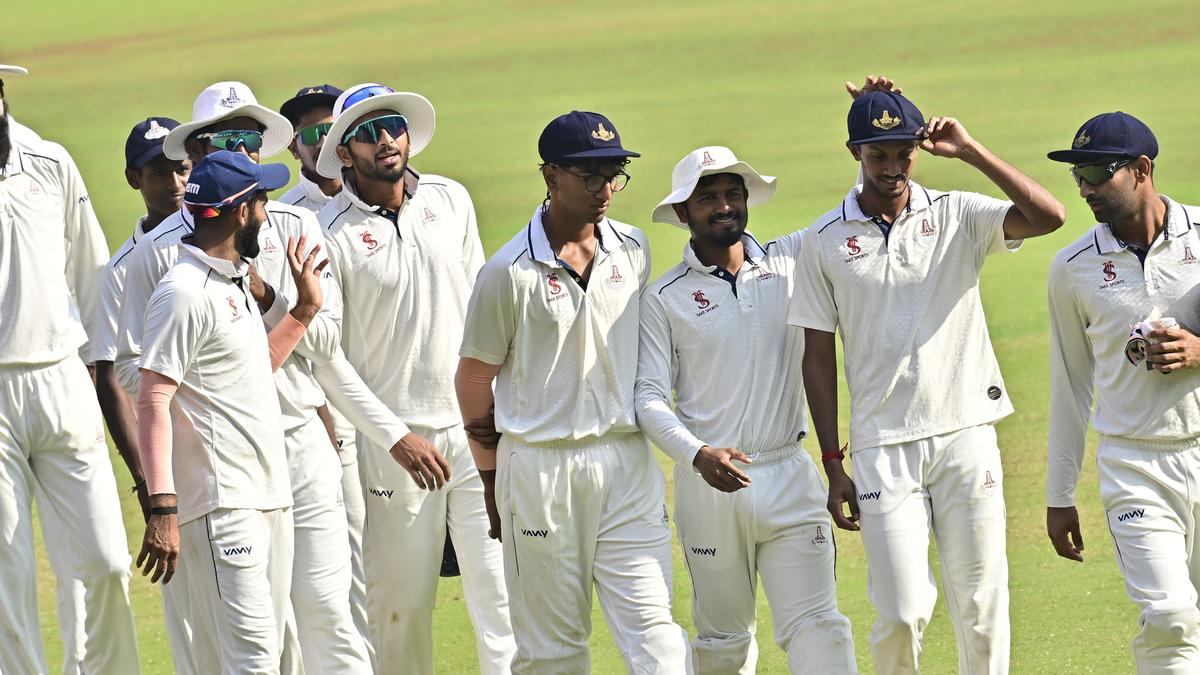
Playing the Ranji Trophy is a major goal for cricketers who want to represent their state and build a professional career in Indian cricket. It is India’s premier domestic first class competition, featuring batters, bowlers, wicketkeepers and all rounders competing in multi day matches.
There is no single nationwide trial that guarantees a place in the Ranji Trophy. Players generally progress through competitive club cricket, district tournaments, state age group competitions or senior cricket, depending on their age and experience. Selection depends on match performances, eligibility, fitness and the requirements of the state team.
To pursue this route, you need to understand the BCCI tournament structure, find your state cricket association, meet its registration rules and build a record in recognised competitions.
How to Play Ranji Trophy? The Selection Process
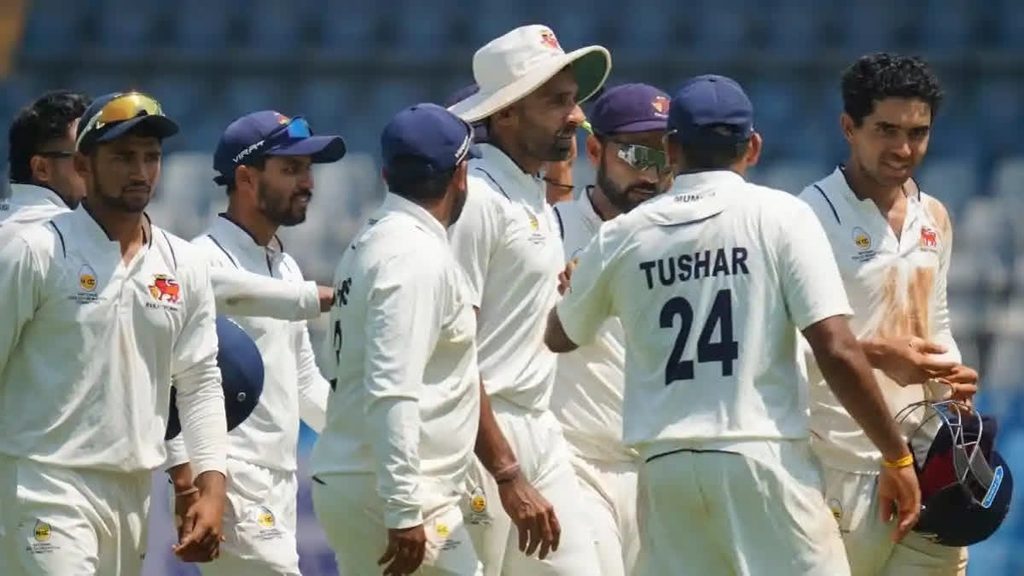
Source: ETV Bharat
The usual pathway from grassroots cricket to the Ranji Trophy involves several stages. However, not every player follows the same route. Experienced senior cricketers may enter the selection system through club leagues and senior competitions without progressing through every junior tournament.
| Stage | What You Need to Do | Main Objective |
|---|---|---|
| 1. Cricket academy or club | Develop technique, fitness and match skills | Build a strong foundation |
| 2. Competitive club cricket | Play recognised league matches | Record competitive performances |
| 3. District cricket | Enter district competitions where applicable | Progress to representative cricket |
| 4. State age group or senior tournaments | Compete in the relevant BCCI pathway | Gain selection visibility |
| 5. State senior selection | Perform in recognised matches and attend announced camps or trials | Earn consideration for the senior squad |
| 6. Ranji Trophy squad | Meet eligibility and selection requirements | Represent your state in first class cricket |
The pathway can be summarised as:
Club cricket → District cricket → State age group or senior competitions → State senior selection → Ranji Trophy squad
The exact route depends on your state association, age, previous performances and the competitions available in your region.
Which BCCI Tournaments Help You Reach the Ranji Trophy?
The BCCI operates a structured domestic calendar covering junior, Under 23 and senior cricket. These tournaments give players opportunities to compete at different levels and build experience in formats that match their age group and development.
The following competitions form important parts of the men’s domestic pathway. Tournament formats and eligibility should always be checked against the current season’s official schedule. The BCCI’s 2026–27 Domestic Season Ready Reckoner lists the competitions and formats for that season.
| Age Group | Multi Day or First Class Competition | White Ball Competition |
|---|---|---|
| Under 16 | Vijay Merchant Trophy | No equivalent men’s national white ball tournament in this pathway |
| Under 19 | Cooch Behar Trophy | Vinoo Mankad Trophy, 50 overs |
| Under 23 | Col. C. K. Nayudu Trophy | Men’s U23 State A Trophy, T20 |
| Senior | Ranji Trophy, Duleep Trophy, Irani Cup | Vijay Hazare Trophy, Syed Mushtaq Ali Trophy |
Which Tournament Should You Target?
Vijay Merchant Trophy: This is the national Under 16 multi day competition. It gives younger players an opportunity to develop red ball batting, bowling and fielding skills.
Cooch Behar Trophy: This Under 19 multi day competition helps young cricketers gain experience in longer matches before progressing to senior cricket.
Vinoo Mankad Trophy: This Under 19 one day competition provides experience in 50 over cricket. Strong performances can help players progress through the state pathway.
Col. C. K. Nayudu Trophy: This Under 23 multi day competition is an important bridge between junior cricket and the senior game. The BCCI reduced its age limit from Under 25 to Under 23 in 2014, while allowing a maximum of three Ranji Trophy capped players in the playing XI under the rules introduced at that time. The eligibility structure has changed over subsequent seasons, so check the current regulations. (The Indian Express)
Men’s U23 State A Trophy: This T20 competition gives Under 23 players experience in the shorter format. The 2026–27 calendar lists it as a T20 tournament.
Ranji Trophy: This is the senior domestic first class competition and the main target for players pursuing a red ball career at state level.
Vijay Hazare Trophy and Syed Mushtaq Ali Trophy: These senior competitions provide opportunities in 50 over and T20 cricket respectively. Performing consistently in recognised senior tournaments can strengthen a player’s domestic selection credentials.
1. Join a Cricket Academy or Competitive Club
Your first priority should be to develop your game in an environment where coaches can assess and improve your skills. A good academy can help you work on technique, fitness, match awareness and discipline.
However, academy training alone is not usually enough. You need to play competitive cricket against players of different abilities and maintain a record of actual match performances.
Look for a club that participates in competitions recognised by your district or state cricket association. Before registering, ask:
- Which league or tournament does the club participate in?
- Are official matches and scorecards available?
- How are players selected for competitive matches?
- Does the club have qualified coaches and regular access to grounds?
- Can players progress to district or state association competitions?
Before paying a large academy fee, check the quality of coaching, match opportunities and the experience of the coaching staff. A costly academy does not guarantee selection for a state team.
2. Play District and State Association Cricket
Club cricket provides match experience, but recognised district and state competitions can offer a clearer route towards representative selection.
Depending on your state, opportunities may include district leagues, inter district tournaments, zonal competitions, age group matches or state senior leagues. The structure differs across associations.
To find the correct route:
- Identify the state cricket association responsible for your area.
- Visit its official website and look for player registration, district cricket and selection announcements.
- Find the affiliated district association or recognised clubs in your area.
- Check the eligibility requirements and registration deadlines.
- Participate in recognised competitions and keep records of your performances.
If you perform consistently in competitive matches, coaches and selectors have stronger evidence of your ability than they would from practice sessions alone.
Young players should identify the appropriate age group tournament. Senior players should check open age or senior competitions rather than assuming that they must enter through junior cricket.
3. What Are the Eligibility Rules for Playing Ranji Trophy?
Eligibility is one of the most important parts of state selection. Performing well in matches does not automatically make you eligible to represent any state you choose.
BCCI registration rules generally allow a player to qualify for an association through birth within its jurisdiction or through qualifying education, employment or residence there. The exact documentation and conditions depend on the applicable season’s rules.
For example, the BCCI’s 2025–26 registration rules described local eligibility through birth qualification or qualifying education, bona fide employment or residence in the association’s jurisdiction for the required period. The association and BCCI must verify the supporting documents. (BCCI registration rules published by the Bihar Cricket Association)
What Documents May You Need?
The required documents vary by association and player category. They may include:
- Birth certificate and supporting birth records.
- Aadhaar or other accepted identity documents.
- School or college records if claiming eligibility through education.
- Residence or domicile documents where required.
- Employment documents if eligibility is based on qualifying employment.
- Previous player registration details and an NOC if transferring from another association.
Submit genuine, consistent documents. The name, date of birth and other details should match across your records. Ask the association for its current official checklist before submitting an application.
Can You Change Your State Cricket Association?
Yes, but changing your state association is not simply a matter of moving to another city or joining a new club.
Players transferring between associations may need a No Objection Certificate (NOC) from their previous association, acceptance or supporting documentation from the new association, and BCCI registration approval under the applicable rules.
The deadline is season specific. For example, the published 2025–26 transfer rules set 30 September 2025 as the deadline for inter state transfers for that season. Do not assume that the same deadline applies unchanged every year.
Before making a transfer, contact both associations and confirm the current requirements in writing. An incomplete or late application may prevent you from representing the new association that season.
4. What Is the Age Cutoff for BCCI Cricket Trials?
Age group eligibility is based on the applicable tournament rules and the date of birth recorded in your verified documents. The relevant cutoff date and eligible birth date range should be checked for the particular season.
For example, under the published 2026–27 age group criteria, a player targeting the men’s Under 19 pathway must check the current competition notice. The applicable date range for the Cooch Behar Trophy is tied to the BCCI’s season rules; players should not rely on an age calculator or an old year’s eligibility table as final confirmation.
For a concrete example, the published age category guidance for the 2026–27 season uses 1 September 2007 as the starting birth date for the men’s Under 19 category. Confirm this against your state association’s current registration notice before applying.
If you are close to the cutoff, ask the association to confirm your eligibility before paying for coaching, trials or registration.
What Happens if a Player Falsifies Their Age?
The BCCI has formal age verification procedures for junior cricket. It may examine birth certificates, school records and other documents, and its age verification programme can include scientific bone age assessment for relevant competitions.
The BCCI has stated that players found submitting fake or altered birth certificates can face a two year ban. Its published measures also provide for a two year ban for domicile fraud. (BCCI’s official notice on age and domicile fraud)
Use genuine records and correct any errors through the official process. Falsifying age or residence documents can damage your eligibility and cricket career.
5. How to Find Official Ranji Trophy Trials
There is no single nationwide Ranji Trophy trial that every aspiring player must attend. Senior team selection is managed through the relevant state association, and the process may involve recognised match performances, selection camps, announced trials or a combination of these.
Follow these steps to find legitimate opportunities:
- Identify the state association under whose selection system you are eligible to play.
- Visit its official website and check the domestic cricket or selection announcements.
- Look for senior team registration notices, probables camps and official trials.
- Read the eligibility criteria, application instructions and deadlines.
- Contact the association through its published contact details if anything is unclear.
- Keep copies of your registration, match records and selection communications.
Some associations select players mainly through recognised competitions. Others may organise trials or camps at particular stages. Do not assume every state follows the same process or holds open trials every year.
The BCCI official website and your state association’s official channels are the best starting points for checking domestic cricket information.
6. What Do Ranji Trophy Selectors Look For?
Selectors need evidence that a player can perform against strong opposition over long matches. A good net session may show potential, but consistent competitive performances provide a more complete picture.
Batters
Source: NewsByte
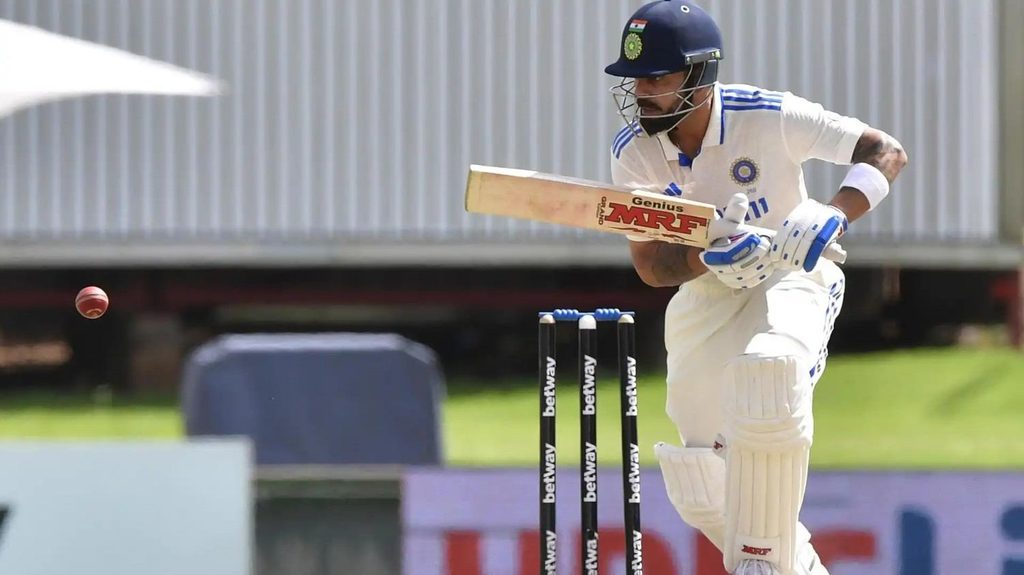
Batters should demonstrate sound defensive technique, patience, judgement outside off stump and the ability to build an innings. Hundreds can strengthen a player’s record, but selectors also consider the quality of opposition, match conditions and the player’s role in the team.
A batter who can survive difficult spells, rotate the strike and score when opportunities appear is better prepared for first class cricket than someone who depends only on attacking shots.
Bowlers
Fast bowlers need control over line and length, the ability to maintain intensity and a plan for taking wickets over long spells. Swing, seam movement and changes of pace can add value when used with control.
Spinners need accuracy, variation, patience and the ability to create pressure. Selectors also assess fitness, workload management and performance on different types of pitches.
Wicketkeepers
Wicketkeepers are assessed on clean catching, footwork, stumpings, movement behind the stumps and communication with bowlers. Batting ability may also influence selection, depending on the team’s requirements.
All Rounders
All rounders must demonstrate genuine value in more than one discipline. A player who contributes with both bat and ball can provide team balance, but both skills need to stand up in competitive matches.
7. How to Build a Strong Cricket Match Record
One of the most practical ways to improve your selection chances is to maintain an accurate record of your performances.
Record your matches, opposition, runs, dismissals, bowling figures and role in each game. Keep official scorecards or links to recognised competition results whenever possible.
| Player Role | Useful Performance Evidence |
|---|---|
| Batter | Runs, batting average, centuries, fifties and consistency |
| Fast bowler | Wickets, bowling average, economy and ability to bowl long spells |
| Spinner | Wickets, control, pressure created and performance across innings |
| Wicketkeeper | Catches, stumpings, keeping consistency and batting contributions |
| All rounder | Reliable contributions with both bat and ball |
Numbers need context. A quick 70 on a difficult pitch may be more valuable than a higher score on an easy surface. Similarly, a bowler’s spell should be assessed according to conditions, opposition quality and opportunities created, not only wickets taken.
Ask your coach for honest feedback after matches. Identify weaknesses and work on them between competitions.
8. How Much Do Ranji Trophy Players Earn?
Ranji Trophy players receive match fees from the BCCI for each playing day. The latest publicly verifiable BCCI rate table I could confirm lists senior men’s domestic match fees according to a player’s number of career matches.
| Career Matches | Playing XI Fee Per Day | Reserve Fee Per Day |
|---|---|---|
| Up to 20 matches | ₹40,000 | ₹20,000 |
| 21 to 40 matches | ₹50,000 | ₹25,000 |
| More than 40 matches | ₹60,000 | ₹30,000 |
These rates appear in the BCCI’s September 2021 domestic match fee announcement and were reported again by The Indian Express in March 2024. They should be treated as the latest publicly verifiable rates here, not a guarantee that no later revision has taken place. (The Indian Express)
The total a player earns depends on the number of playing days, career match category, whether the player is in the starting XI or among the reserves, and the matches played during a season. Some state associations may provide additional payments or benefits under their own policies.
A place in a Ranji Trophy squad is not a guaranteed salary or fixed annual income. Earnings depend on selection and participation.
9. Prepare for the Demands of First Class Cricket
Ranji Trophy matches are usually played over four days. Players need the physical and mental capacity to perform for long periods rather than only in short bursts.
Batters must concentrate for extended innings. Bowlers need stamina and recovery between spells. Fielders must maintain focus across long sessions, even when chances are limited.
Your preparation should include:
- Regular strength and conditioning work suited to cricket.
- Sprinting, agility and movement drills.
- Batting sessions that develop defence and patience.
- Bowling practice that builds control and workload tolerance.
- Match simulations with realistic red ball conditions.
- Recovery, hydration, sleep and appropriate nutrition.
Work with a qualified coach or fitness professional to plan your workload. Increasing bowling volume too quickly can raise the risk of injury, particularly for young fast bowlers.
10. Can You Play Ranji Trophy Without Playing Junior Cricket?
Yes. A player can pursue senior cricket without progressing through every junior age group. However, selection remains competitive, and the route depends on state association eligibility, the player’s match record and the available opportunities.
An older player may need to establish themselves through recognised club leagues, senior district competitions or other tournaments that attract selectors. Previous experience in competitive cricket can help demonstrate readiness for longer matches.
There is no guaranteed shortcut through a private academy, trial organiser or talent competition. A private tournament may provide useful match experience, but participation alone does not guarantee selection for a state team.
The important step is to enter the recognised senior cricket structure and produce performances that selectors can assess.
11. Are Private Ranji Trophy Trials Genuine?
Some private cricket organisations offer training camps, exposure events or competitions for aspiring players. These may help players develop their skills, but they should not automatically be treated as official Ranji Trophy selection trials.
A preparation programme and an official state selection process are not the same thing. Read the organiser’s terms carefully and confirm the event directly with the relevant state association.
Before registering, ask these questions:
- Which cricket association is conducting the trial?
- Is the event listed on that association’s official website?
- Who will conduct the selection?
- What competition or squad does the trial lead to?
- Are the fees and selection terms clearly stated?
- Can the association independently confirm the event?
Be cautious of anyone promising guaranteed selection in exchange for payment. No private organisation can guarantee a place in a state Ranji Trophy squad simply because a player purchases a package or attends a camp.
Do not pay large sums based only on a social media advertisement, a personal message or an unverified claim of association with the BCCI.
12. How Long Does It Take to Reach the Ranji Trophy?
There is no fixed timeline. Some players progress through junior representative cricket before reaching the senior team. Others spend years playing club and district cricket before receiving a higher level opportunity.
Progress depends on performance, age, fitness, available competitions, selection requirements and the strength of the player pool in your state.
Rather than focusing on a promised deadline, set measurable goals for each season. Improve your performance, play more recognised matches, address weaknesses and seek feedback from qualified coaches. Consistency over time gives selectors more evidence to assess.
13. Can Overseas Players Play the Ranji Trophy?
Source: Outlook India
The Ranji Trophy is an Indian domestic competition in which teams represent state associations and other eligible domestic cricket organisations. Overseas professionals cannot simply join a Ranji team as foreign players.
Eligibility is governed by BCCI registration rules, including nationality and association eligibility requirements. Players born outside India or holding overseas passports should contact the relevant state association to confirm their status before attempting registration. Special eligibility conditions may apply, so do not assume that residence alone is sufficient.
FAQs
Start by playing competitive club cricket, then pursue district and state association competitions where applicable. Perform consistently and follow official senior selection announcements from the relevant state association.
No single nationwide open trial is required for every player. State associations manage their selection processes, which may include recognised match performances, trials, camps or a combination of these.
Yes. An academy is not a universal requirement. What matters is developing your skills, meeting eligibility rules and gaining competitive experience that allows selectors to assess your ability.
The Ranji Trophy is a senior competition, so it is not restricted to the junior age group limits used for Under 16, Under 19 or Under 23 tournaments. Players must meet the applicable senior registration and eligibility requirements of the association they represent.
The cutoff is set under the relevant season’s BCCI age group rules. For the 2026–27 season, check the official registration notice and confirm the eligible birth date range with your state association before applying.