
A leg bye in cricket is an extra awarded when the ball first strikes the batter’s person and the umpire is satisfied that the batter either attempted to play the ball with the bat or tried to avoid being hit. These runs increase the team total but are not normally added to the batter’s individual score.
A leg bye is not awarded every time the ball hits the batter. The rules also distinguish between contact with the batter’s body, a hand not holding the bat, and a glove or hand holding the bat. Understanding the leg bye rule, umpire signal and difference between a bye and a leg bye helps fans read scorecards correctly and follow match decisions.
What Is a Leg Bye in Cricket?
Source: MCC Laws Of Cricket
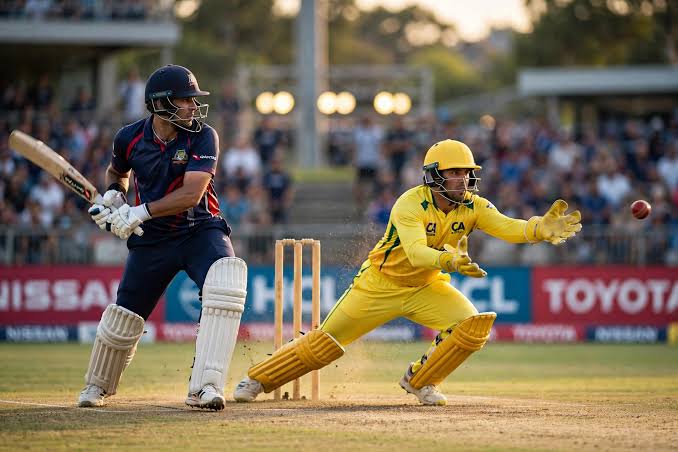
A leg bye occurs when the ball first strikes the batter’s person and the umpire allows runs under Law 23. The ball may hit the batter’s pad, leg, body or eligible protective equipment before moving away from the wicket.
For example, a bowler delivers the ball, the batter attempts a defensive shot, and the ball strikes the pad before rolling towards fine leg. If the umpire is satisfied that the batter attempted to play the ball, the batters may complete runs. Two completed runs would normally be recorded as two leg byes.
Leg byes are classified as extras. They increase the batting team’s total but do not normally count towards the batter’s personal score or the bowler’s runs conceded.
What Is the Leg Bye Rule in Cricket?
The leg bye rule depends on what the batter does when the ball is delivered. Under Law 23.2.1, the umpire must be satisfied that the batter either attempted to play the ball with the bat or tried to avoid being hit.
1. The Batter Attempts to Play the Ball
If the batter attempts a shot but the ball strikes the pad or another part of the body, leg byes may be allowed.
For example, a batter tries to defend a straight delivery but misses the ball. It hits the pad and rolls into an open area. If the batter completes a run, the umpire can allow it as a leg bye.
The batter does not need to make contact with the bat. The important point is that an attempt to play the ball was made.
2. The Batter Tries to Avoid Being Hit
A batter may move their body, turn away or take another reasonable action to avoid a delivery. If the ball still strikes their person, the umpire can allow leg byes when satisfied that the batter genuinely tried to avoid being hit.
3. When Are Leg Byes Not Allowed?
If the batter neither attempts to play the ball nor tries to avoid being hit, leg byes cannot be awarded.
Under Law 23.3, the umpire disallows the runs and calls dead ball at the point specified by the law, unless the ball has already become dead for another reason. Any not out batter must return to their original end. If the delivery was also a no ball, the one run no ball penalty still applies.
4. Does Contact With a Hand or Glove Count as a Leg Bye?
Not always. The Laws distinguish between a hand or glove holding the bat and a hand that is not holding it.
- Glove or hand holding the bat: Treated as part of the bat. If the ball contacts the glove holding the bat, the resulting runs may be credited to the striker rather than recorded as leg byes.
- Hand not holding the bat: Treated as part of the batter’s person. Leg byes may be allowed if the batter attempted to play the ball or tried to avoid being hit.
- Deliberate contact: If a batter deliberately allows the ball to hit a hand that is not holding the bat, the umpire may disallow leg byes. Depending on the circumstances, the batter may also face dismissal for obstructing the field.
The exact decision depends on how the contact occurs and which part of the batter the ball strikes.
What Is the Leg Bye Signal in Cricket?
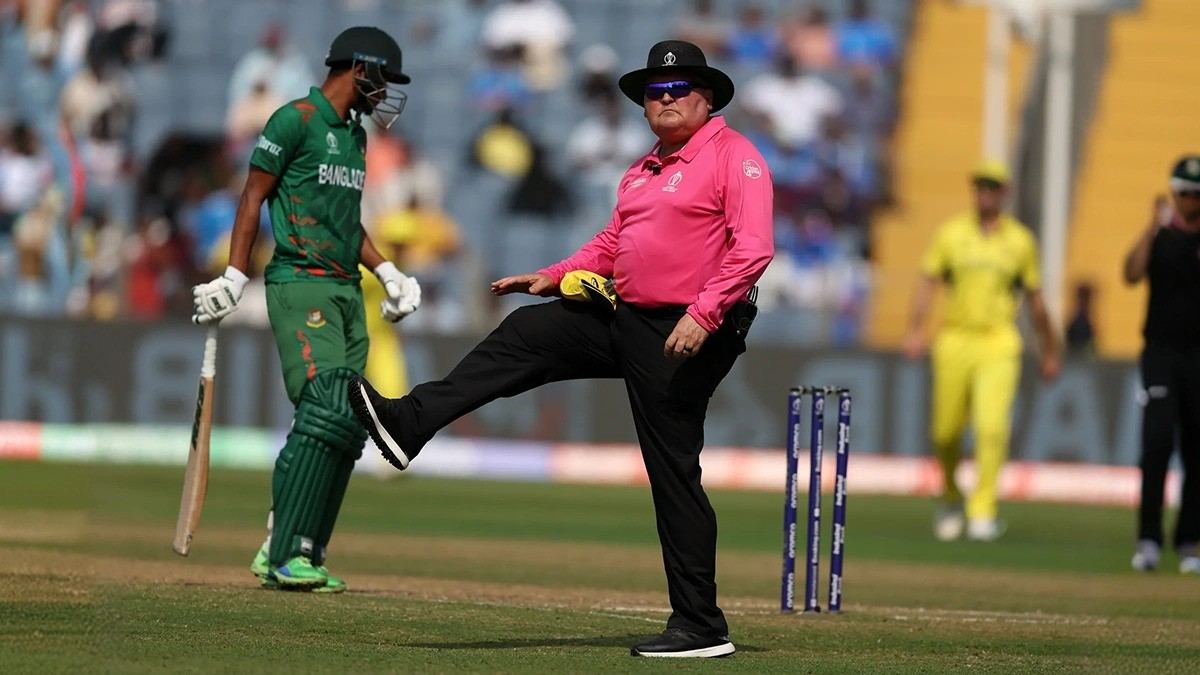
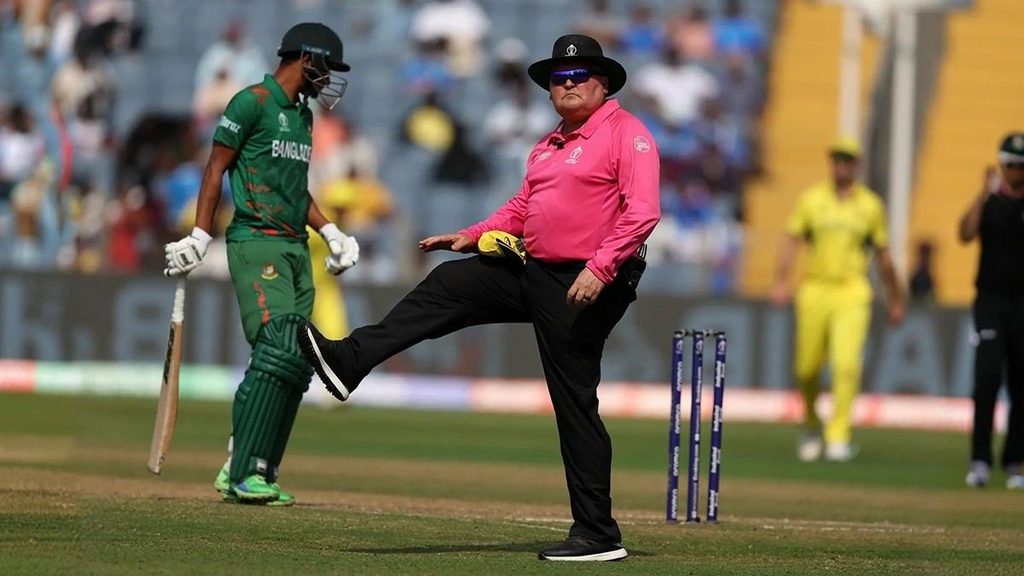
The leg bye signal is made by the umpire after the ball becomes dead. The umpire touches a raised knee with one hand to tell the scorers that the runs should be recorded as leg byes.
This is different from the signal for a bye, where the umpire raises an open hand above the head.
| Scoring Decision | Umpire Signal |
|---|---|
| Leg bye | Touches a raised knee with the hand |
| Bye | Raises an open hand above the head |
| No ball | Extends one arm horizontally |
| Wide | Extends both arms horizontally |
The signal helps scorers classify the runs correctly. This matters because byes and leg byes appear separately in the extras section of a cricket scorecard.
How Are Leg Byes Shown in a Scorebook?
Scorers commonly use the letter L to record leg byes. Some scoring systems also use an inverted triangle, with the point facing down, to identify the extra. The number of runs is recorded alongside the symbol according to the scorebook’s conventions.
For example, two leg byes may be recorded as L2 or shown using an inverted triangle with the number 2. Notation can vary between scoring systems, so scorers should follow the format used for the match.
How Are Leg Bye Runs Scored?
Source: Sports Maxx
Leg bye runs are added to the team total as extras when the conditions for awarding them are satisfied. The number depends on the runs completed, any boundary allowance and whether there is later contact with the bat.
| Match Situation | Runs Recorded | Explanation |
|---|---|---|
| Ball hits the pad and batters complete one run | 1 leg bye | One completed run is added as an extra |
| Ball hits the body and batters complete two runs | 2 leg byes | Both completed runs count as extras |
| Ball hits the pad and reaches the boundary without later bat contact | 4 leg byes | The usual boundary allowance is recorded as leg byes |
| Ball hits the batter on a no ball and batters complete two runs | 1 no ball extra and 2 leg byes | The penalty and completed runs are recorded separately |
| Batter makes no attempt to play or avoid the ball | No leg byes | The umpire disallows the running and boundary runs under the rules |
| Ball first hits the batter’s person and then makes inadvertent contact with the bat | Runs credited to the striker | Law 23.2.2.1 applies when the conditions for awarding runs are met |
There is an important distinction when the ball makes later contact with the bat. Under Law 23.2.2.1, if the ball first strikes the batter’s person and then makes inadvertent contact with the bat, the resulting runs are credited to the striker, provided the other requirements are satisfied. This is different from a deliberate, lawful second strike, which is governed by Laws 34.3 and 34.4.
Can Leg Byes Be Scored on a No Ball?
Yes. Leg byes can be scored from a no ball if the requirements for awarding leg byes are met.
For example, the bowler oversteps the crease and delivers the ball. The batter attempts a shot, but the ball hits the pad and the batters complete two runs. The batting team receives one no ball extra and two leg byes, making three runs in total.
Laws 18.10.2 and 21.16 confirm that the one run no ball penalty is recorded separately, while the remaining runs are recorded as byes or leg byes when appropriate. The delivery also does not count as one of the six legal balls in the over.
A no ball and a wide are not scored the same way. Byes and leg byes can accrue from a no ball, but they cannot be recorded as byes or leg byes from a wide. Runs off a wide delivery are recorded as wides.
Are Leg Byes Counted in the Batter’s Score?
No. Leg bye runs are recorded as extras and added to the team total, not to the batter’s individual score.
For example, suppose a batter has scored 35 runs and then the ball hits their pad. The batters complete two runs, and the umpire allows them as leg byes. The batter remains on 35, while the team total increases by two.
Leg byes are also not charged to the bowler’s runs conceded. However, the delivery generally counts as a ball faced by the striker. This is why a team’s total can be higher than the combined runs credited to its batters and charged to its bowlers.
Do Leg Byes Count as Balls Faced?
Yes. Under standard cricket scoring conventions, a leg bye counts as a ball faced by the striker, even though the runs are recorded as extras rather than credited to the batter.
This can affect a batter’s strike rate because the ball faced is included in the denominator, while the leg bye runs do not increase the batter’s individual score.
Can an Over Containing Only Leg Byes Be a Maiden?
Yes. An over containing only leg byes can still be recorded as a maiden over because leg bye runs are not charged to the bowler’s runs conceded. The batting team’s total increases, but the bowler may still have conceded zero runs in that over.
If leg byes are disallowed under Law 23.3, those running or boundary runs do not count as extras. They are not recorded as leg byes. Any applicable no ball penalty remains separate.
What Is the Difference Between a Leg Bye and a Bye?
A bye and a leg bye are both extras, but the key difference is whether the ball touches the batter’s person.
| Point | Leg Bye | Bye |
|---|---|---|
| Meaning | Runs allowed after the ball first strikes the batter’s person | Runs scored when the ball passes the batter without touching the bat or person |
| Contact | Ball touches the batter’s person, such as the pad or body | Ball does not touch the bat or the batter’s person |
| Batter’s Action | Must attempt a shot or try to avoid being hit | No equivalent attempt condition applies |
| Scorecard | Recorded under leg byes | Recorded under byes |
| Credited to Batter | Normally no | No |
| Charged to Bowler | Normally no | Normally no |
| Counted as Ball Faced | Yes | Yes |
| Umpire Signal | Touches a raised knee | Raises an open hand above the head |
For example, if a batter misses a delivery and the wicketkeeper also misses it, allowing the batters to run, those runs may be recorded as byes, provided the delivery is not a wide. If the ball instead strikes the batter’s pad and the conditions for awarding runs are met, the runs are normally recorded as leg byes.
Why Are Leg Byes Important in Cricket?
Leg byes allow the batting team to add runs even when the batter does not make a successful shot with the bat. They can be useful in all formats, especially when every run matters.
As a broad scoring guide, a Test match may see around 20 leg byes and a 50 over match around 10, although actual totals vary considerably with playing conditions and the match itself. These extras can contribute to a team’s total without changing the batter’s individual score.
Leg byes also help explain why a batter’s individual score may not match the number of runs added while that batter was at the crease. The scorecard separates runs scored by the batter from extras such as byes, leg byes, wides and no balls.
They matter to scorers as well. Leg byes are recorded separately, count as balls faced, and do not count as runs conceded by the bowler. An over containing only leg byes can therefore still be a maiden over.
FAQs
A leg bye is an extra awarded when the ball strikes the batter’s person and the umpire is satisfied that the batter attempted to play the ball or tried to avoid being hit.
The umpire touches a raised knee with one hand after the ball becomes dead. This tells the scorers to record the runs as leg byes.
No. Leg byes are added to the team total as extras and are not normally credited to the batter.
A bye occurs when the ball passes the batter without touching the bat or the batter’s person, provided the delivery is not a wide. A leg bye occurs when the ball first strikes the batter’s person and the umpire allows runs under the rules.
Yes. If a qualifying delivery strikes the batter’s person and reaches the boundary without later bat contact, the batting team can receive the usual boundary allowance of four leg byes.
Conclusion
A leg bye in cricket is an extra awarded when the ball strikes the batter’s person and the requirements of the rules are satisfied. These runs count towards the team total but are not normally credited to the batter or charged to the bowler.
The key rule is that the batter must have attempted to play the ball or tried to avoid being hit. Remember that leg byes can be scored from a no ball, but runs from a wide are recorded as wides. Knowing the umpire signal, scorebook notation and difference between byes and leg byes makes cricket scorecards easier to understand.